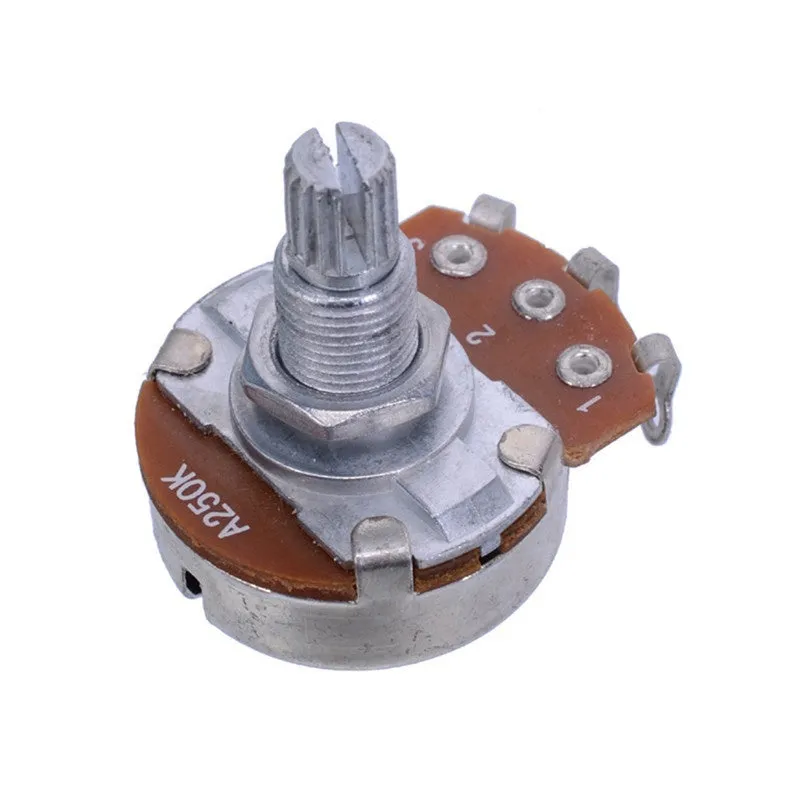
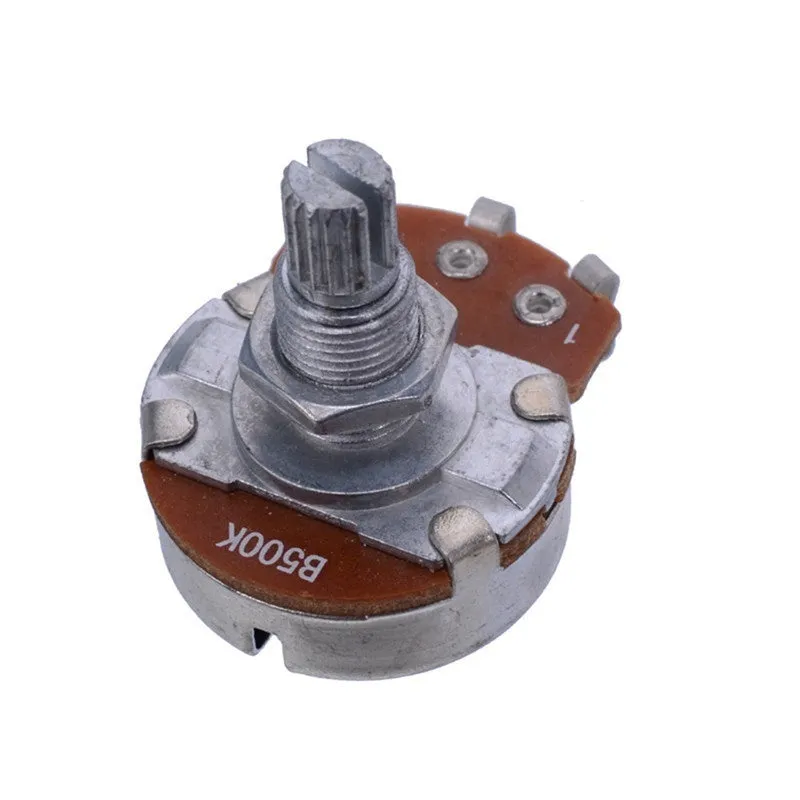
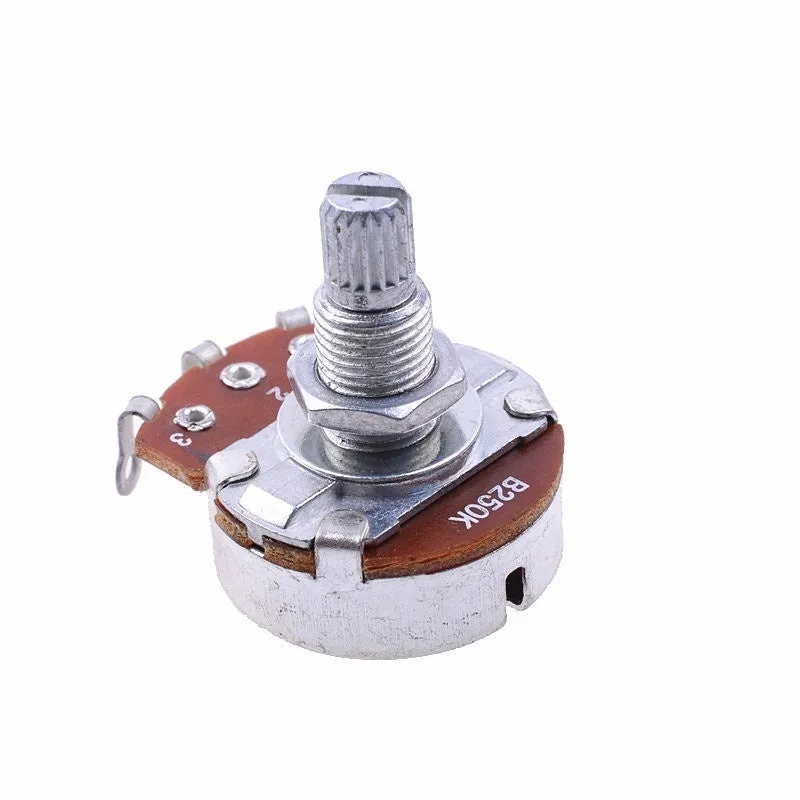
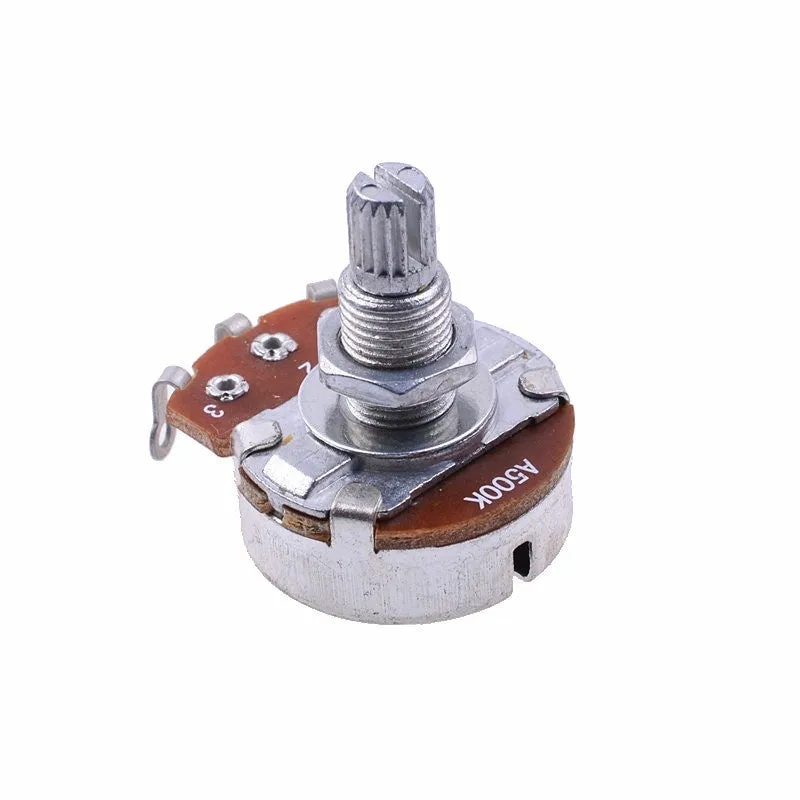
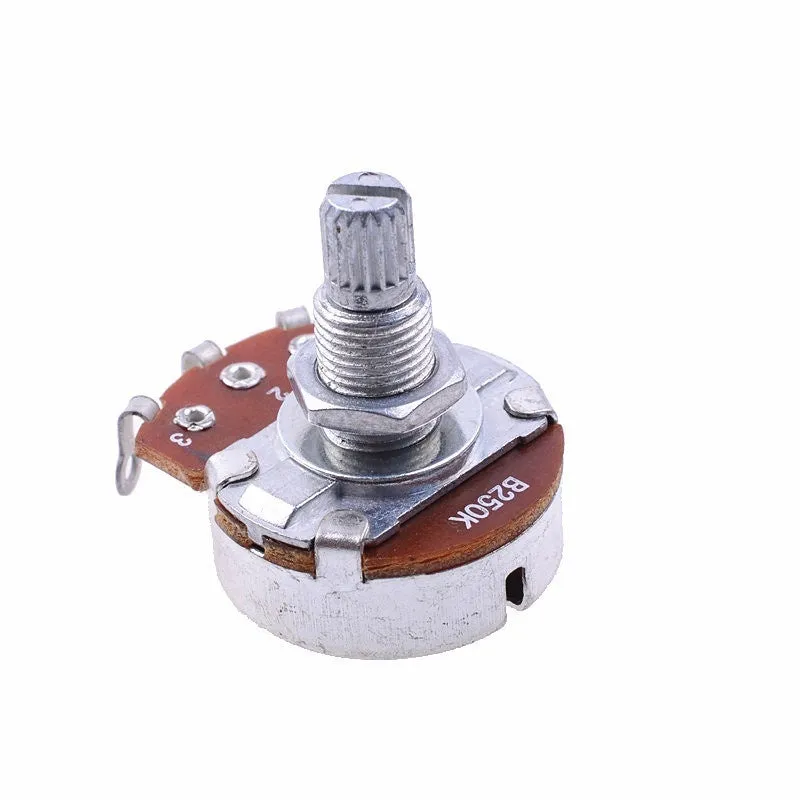
Electric guitar tone potentiometer knob replacement part for volume and tone control in A250K, A500K, B250K, and B500K values, made from metal for instrument upgrade and repair applications


Electric guitar tone potentiometer knob replacement part for volume and tone control in A250K, A500K, B250K, and B500K values, made from metal for instrument upgrade and repair applications
Electric guitar potentiometer knob replacement in metal with A250K, A500K, B250K, and B500K values

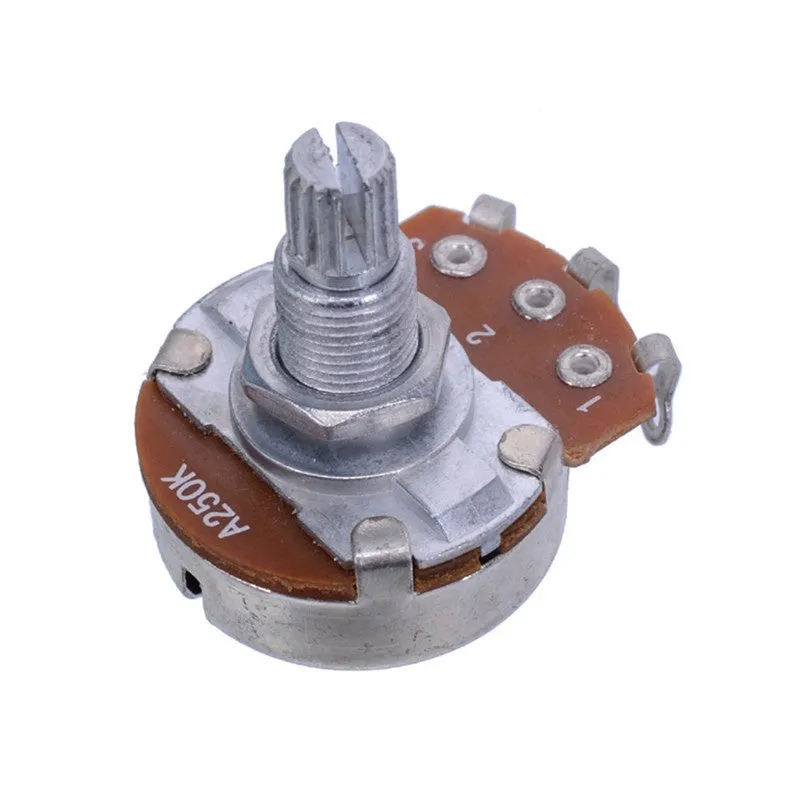
This metal potentiometer knob serves as a functional replacement part for electric guitars, designed to fit standard potentiometer shafts. It addresses the need for repair when original knobs are lost or damaged, or provides an upgrade option for musicians seeking a different tactile feel from their instrument's controls. Available in four specific electrical values—A250K for tone, A500K for tone, B250K for volume, and B500K for volume—it allows for precise compatibility with various guitar wiring configurations. Selecting the correct value is essential for maintaining the intended electrical characteristics of your guitar's circuit.
Features and Construction
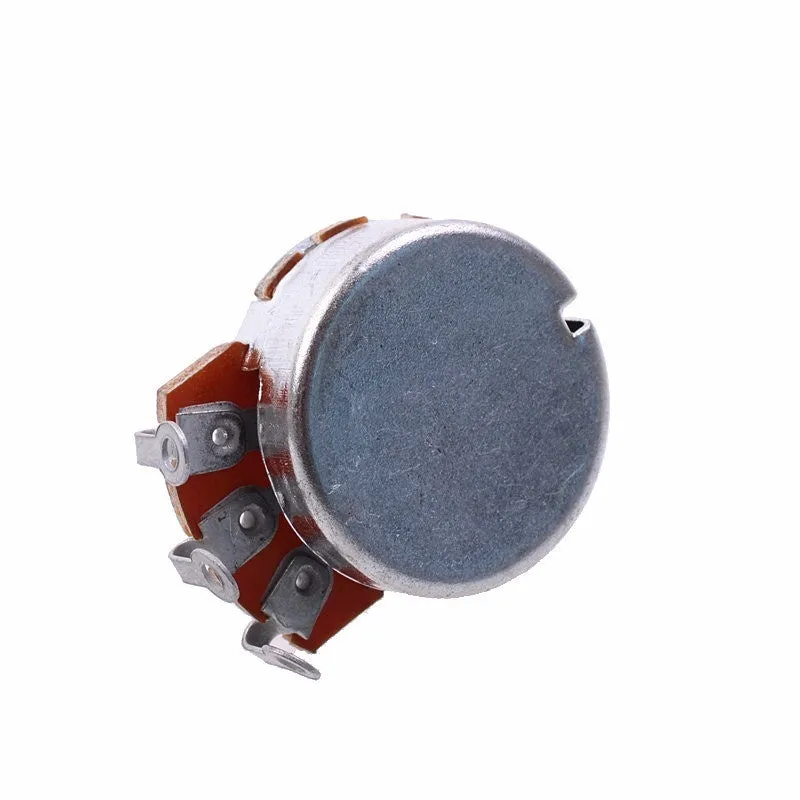
The knob is constructed from metal, offering a different physical presence and potential durability compared to common plastic knobs found on many stock instruments. Its design focuses on functional replacement rather than decorative flair, making it suitable for both repair work and straightforward component upgrades.
Material and Build
The use of metal as the primary construction material provides a weightier, more substantial feel when adjusting volume or tone settings. This can enhance the tactile experience of using the controls, though the source does not specify the exact type of metal, plating, or finish. The build is centred on providing a reliable interface between the player's hand and the potentiometer shaft beneath.
Size and Practical Fit
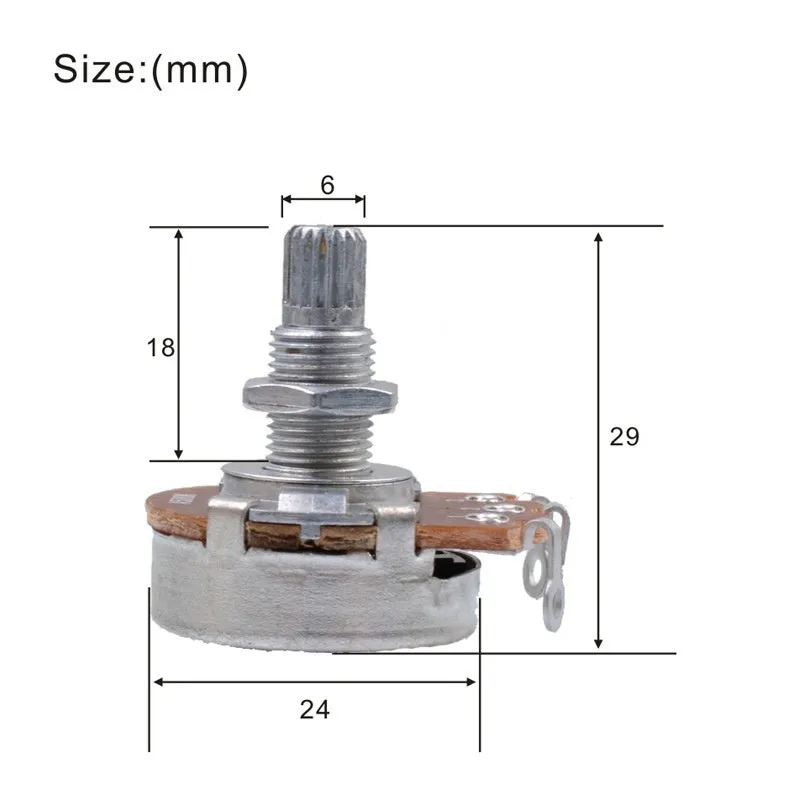
While specific dimensions are not provided, the knob is designed as a direct replacement part, implying a standardised fit for common electric guitar potentiometer shafts. This makes installation straightforward: typically involving aligning the knob with the shaft's splines and pressing it into place. Its application is strictly for musical instruments, specifically within electric guitar electronics.
Uses and Placement
This component has a clearly defined role within the ecosystem of guitar maintenance and modification. It is not a standalone product but a part that integrates into a larger system, fulfilling a specific electrical and mechanical function.
Event or Professional Use
For working musicians or guitar technicians, having the correct replacement parts on hand is crucial. A failed or damaged potentiometer knob, while a small component, can hinder performance by making controls difficult or uncomfortable to use. This metal knob offers a reliable spare part for quick repairs during tours or in a workshop setting, ensuring instruments remain fully operational.
Everyday Home Use
For the home guitarist undertaking DIY maintenance, upgrades, or customisation projects, this knob provides a simple way to refresh an instrument's control panel. Replacing a worn plastic knob with a metal one can change the instrument's aesthetic and feel without requiring complex soldering or electronic work, as it simply pushes onto the existing potentiometer.
Benefits and Buying Value
The value of this product lies in its specificity and functional design. It solves a clear, narrow problem for guitar owners and avoids unnecessary features that would not contribute to its core purpose.
Reuse and Low Maintenance
As a metal component, it may offer greater resistance to wear from frequent adjustment compared to some plastics, though the source provides no specific lifespan claims. Its design facilitates easy replacement if needed in the future, contributing to the long-term maintainability of the guitar. No specialist care instructions are required beyond keeping it clean from excessive dirt or grime.
Why Choose This Product
Choose this potentiometer knob if you require a direct, no-fuss replacement for an electric guitar control knob and prioritise function over decorative styling. The key decision factor is ensuring you select the correct electrical value (A250K, A500K, B250K, or B500K) to match your guitar's existing wiring, as using an incorrect value can alter the instrument's tone response or volume taper. Its metal construction offers a pragmatic upgrade path from basic plastic components.