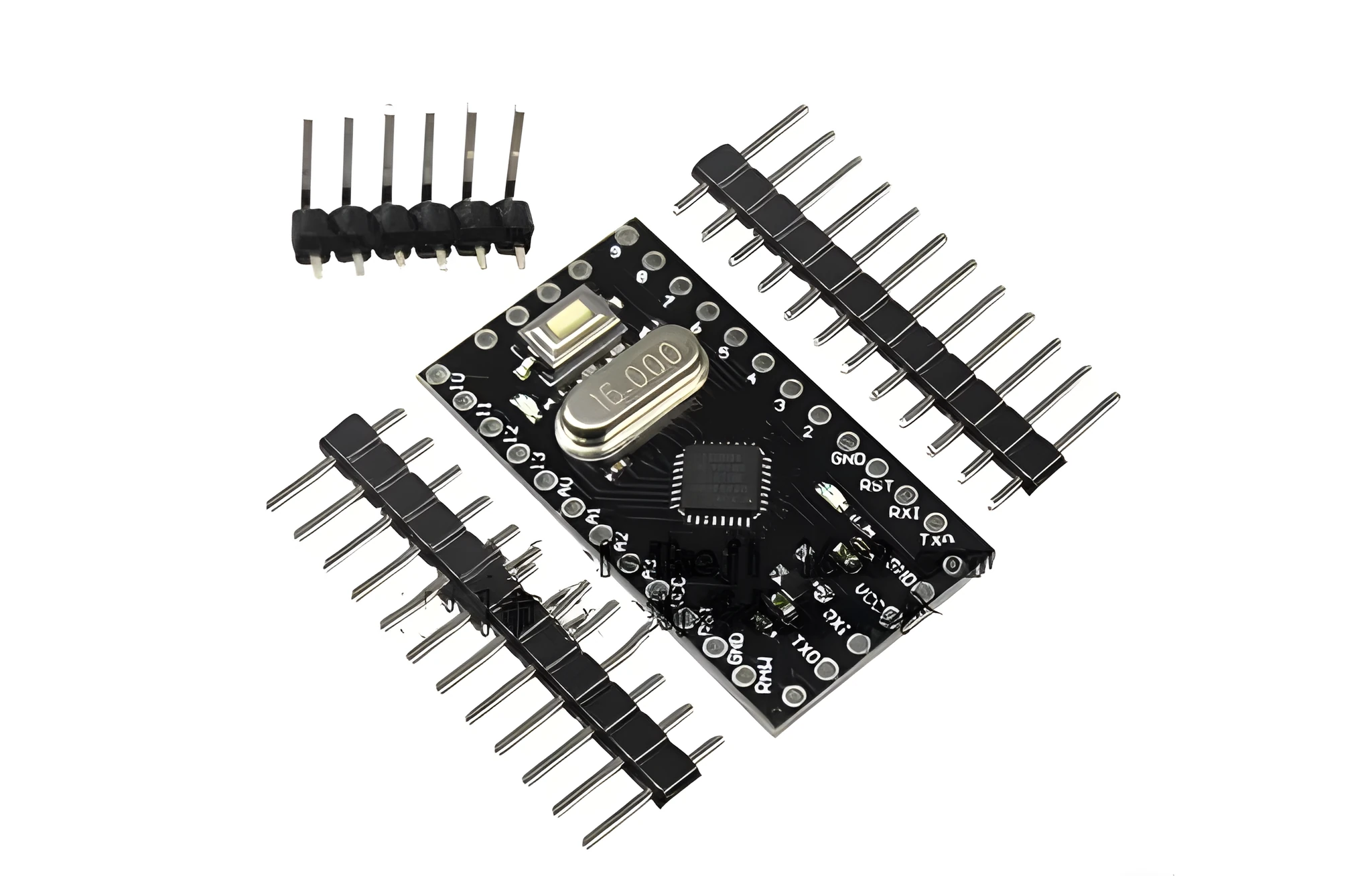
Mini Pro microcontroller circuit board professional version with 14 digital I/O pins, 8 analog inputs, 16MHz resonator, Atmel Atmega328P-AU processor, supporting serial download and external 3.3V-12V DC power supply


Mini Pro microcontroller circuit board professional version with 14 digital I/O pins, 8 analog inputs, 16MHz resonator, Atmel Atmega328P-AU processor, supporting serial download and external 3.3V-12V DC power supply
Mini Pro Professional Microcontroller Board: Atmel Atmega328P-AU with 14 Digital I/O and 8 Analog Inputs
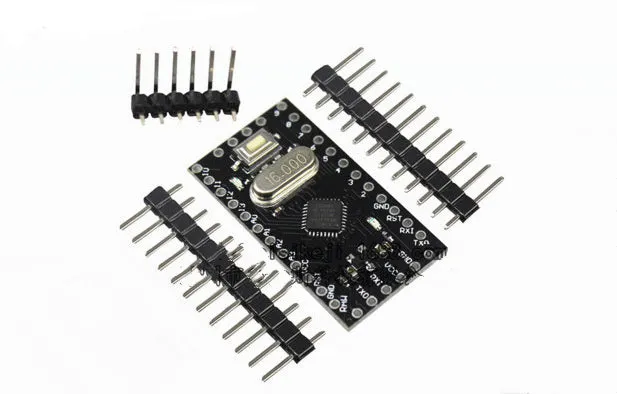
The Mini Pro professional version is a microcontroller circuit board built around the Atmel Atmega328P-AU processor, designed as a compact foundation for electronics prototyping and embedded projects. Measuring 33.3mm by 18.0mm, it provides substantial connectivity in a small footprint, featuring 14 digital input/output pins, eight analog inputs, and a 16MHz resonator for stable timing operations. This board supports serial download for programming and accepts a wide range of external power sources, from 3.3V to 12V DC or a 9V battery, making it adaptable for various applications from basic learning kits to more advanced electronic builds.
Features and Construction

This section details the core specifications and physical build of the Mini Pro microcontroller board, outlining the components that define its capabilities for circuit design and control applications.
Material and Build
The board is constructed as a standard microcontroller circuit board populated with electronic components, including an Atmel Atmega328P-AU microcontroller, a 16MHz resonator for clock generation, and a reset button. It features mounting hole pin headers, which allow the board to be securely fixed within an enclosure or onto a project base. The build includes a TTL-level serial port transceiver port (RX/TX) for serial communication, supporting data exchange with computers or other serial devices.
Size and Practical Fit
With dimensions of 33.3mm in length and 18.0mm in width, the board's compact size is a key practical consideration. This small form factor enables it to fit into space-constrained projects, DIY enclosures, or portable devices where larger development boards might be impractical. The inclusion of mounting holes further aids in secure installation, preventing movement or disconnection in active projects.
Uses and Placement

The board's combination of digital and analog I/O, PWM outputs, and serial communication supports a broad spectrum of applications, from educational environments to hobbyist workshops and functional prototypes.
Event or Professional Use
In professional or educational settings, this board can serve as a test platform for developing control systems, sensor networks, or automation prototypes. Its support for serial download facilitates iterative programming and debugging. The ability to interface with up to eight analog sensors (via ports A0-A7) and control multiple outputs via PWM makes it suitable for data acquisition projects, robotics controls, or interactive installation prototypes where reliable, programmable hardware is required.
Everyday Home Use
For hobbyists and home makers, the board offers a accessible entry point for creating custom electronics, such as smart home sensors, LED lighting controllers, or small motorised projects. The six PWM-capable digital pins (D3, D5, D6, D9, D10, D11) allow for dimming lights or varying motor speeds. Power flexibility, accepting anything from a 3.3V to 12V DC supply or a 9V battery, means it can be integrated into projects powered by common wall adapters or portable battery packs.
Benefits and Buying Value
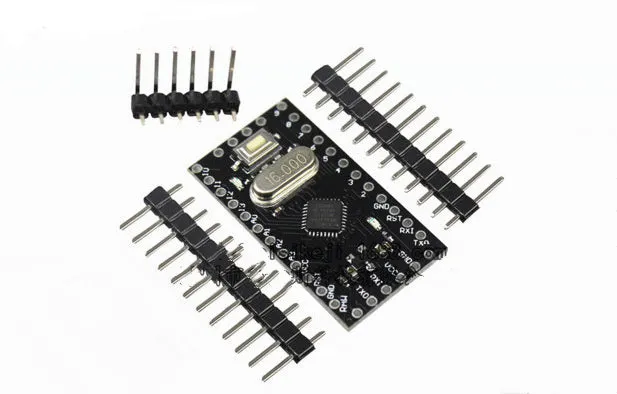
The value of this microcontroller board lies in its specified feature set, which provides a balanced mix of I/O capability, processing power, and physical practicality for a wide range of electronics work.
Reuse and Low Maintenance
As a circuit board, it is designed for repeated use across different projects; its pin headers allow for wiring to be connected and disconnected. There are no complex mechanical parts that require maintenance. Basic care involves keeping the board free from dust and avoiding exposure to excessive moisture to prevent corrosion on the pins and contacts.
Why Choose This Product
This Mini Pro board is distinguished by its clear specification set: the Atmel Atmega328P-AU microcontroller, 14 digital I/O pins (with six PWM), eight analog inputs, and compact 33.3mm x 18.0mm size. Compared to more basic boards, it offers a greater number of analog inputs, which is valuable for sensor-heavy projects. The inclusion of mounting holes and support for a wide external voltage range adds to its practical utility, making it a versatile choice for users who need a capable, well-documented microcontroller platform.